Notes from the Camino
(If you prefer to read in Spanish click here).
I’m on a train, one day after finishing the Camino de Santiago (starting from Tui, about 120 kilometers, or 75 miles).
Here are some of my experiences and reflections, for the friends and family who have asked me how it went.

1. Santiago de Compostela: The Camino Is Absurd
I arrive in Santiago de Compostela by plane. Then I spend 4 hours on two different buses to get to Tui, where I start the Camino… back to Santiago de Compostela.
Absurd?
I’m about to walk a route that became famous more than a thousand years ago, with pilgrims traveling from all over to the church that supposedly holds the remains of Saint James the Apostle…
And I, with zero attachment to Catholicism, many centuries later, am still using the Credencial, the little pilgrim’s passport, to collect stamps that prove I made the journey. All to get a certificate I might be able to use at the gates of heaven, when they ask for my diplomas.
All of this makes sense. I promise.
If there was ever a way to understand that it’s about the journey, not the destination, this is it: I was already at the destination, took two buses to get away from it, and then spent six days walking what a bus covers in four hours.
The walk gave me the chance to get to know places and people, and to have time and space in a way that felt balanced and flexible. It’s one of my favorite ways to travel, and I want more experiences like this.
I understand a lot of people feel the Camino has lost much of its charm because it’s now far more commercialized, and because it’s a very “manufactured” experience. Maybe. So many of our experiences are. And even so, the Camino felt so genuine and kind…
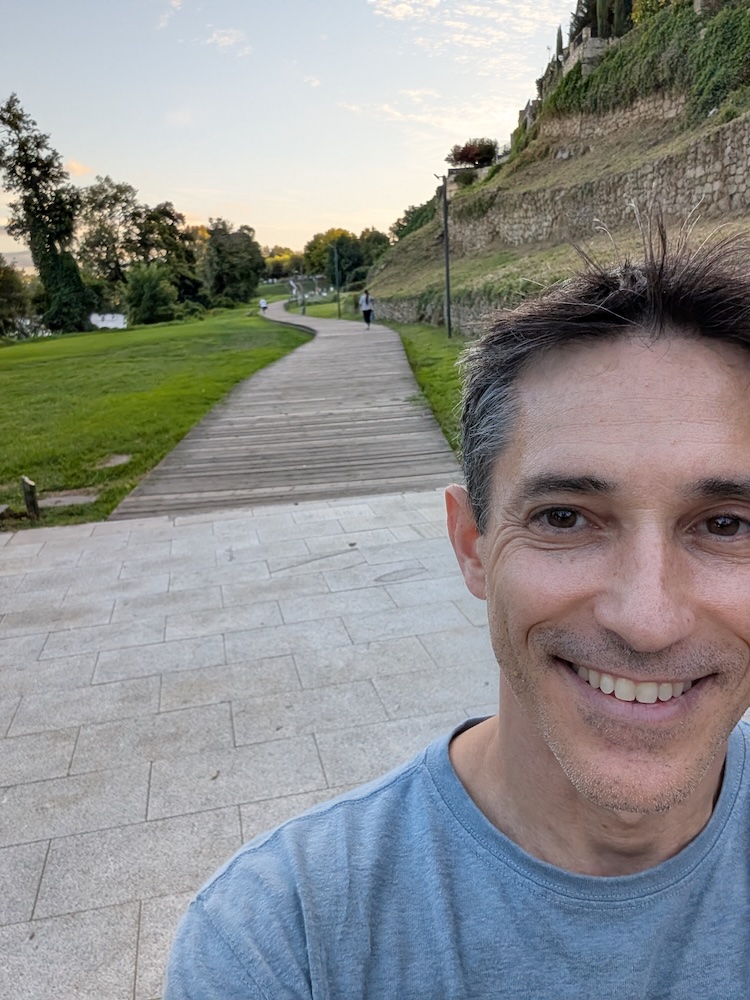
Here’s the riverside promenade in Tui (where I started the Camino), next to the river that separates the town from Portugal:
2. Tui: Seeing the Bridge
In Tui, I asked a couple of locals what they’d recommend. Walk along the promenade by the river, all the way to the bridge into Portugal.
Portugal sounded fantastic. So did seeing the bridge. But after walking for a while, I started wondering whether it was really wise. It would be dark soon, and maybe I should get ready and sleep well to start the Camino strong.
I saw the bridge. It was… a bridge.
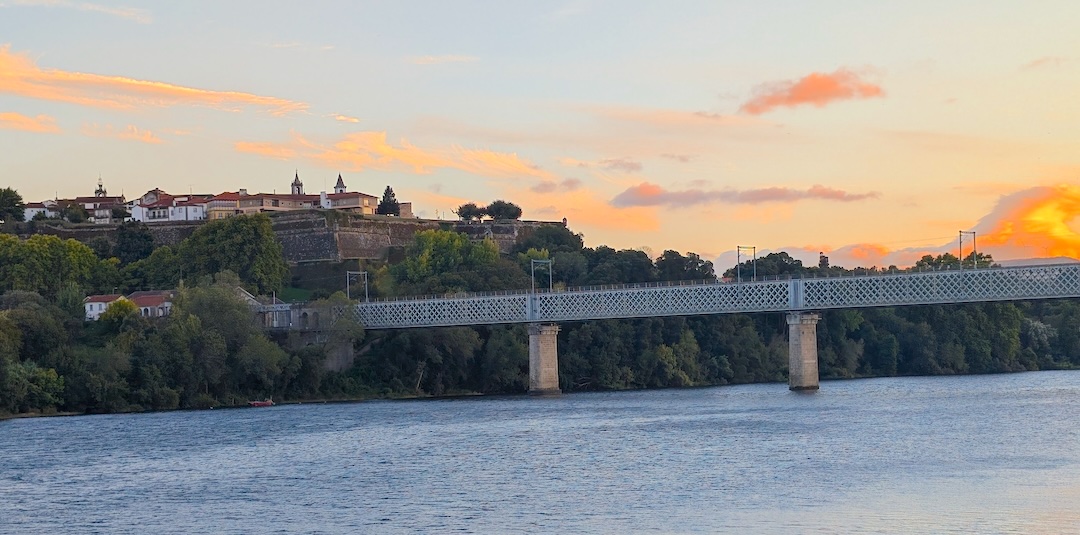
And without crossing it, I could see a large medieval wall on the Portuguese side.
And if I had crossed the bridge, I probably would have found that the wall… was a wall (you can also see it behind the bridge in the photo).
I wondered at the time whether my curiosity to know more about the history would really enrich my experience of what I was seeing, or whether drinking in the moment without overthinking it would be better medicine.
A few days later, the Camino gave me the answer, but I didn’t know it yet. Near Arcade I crossed another bridge, the Pontesampaio bridge, and took a photo of a plaque without stopping to find out what it commemorated:
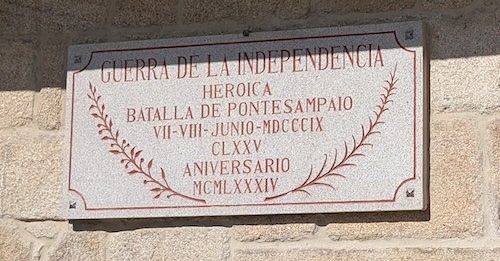
(The plaque reads: “War of Independence. Heroic Battle of Pontesampaio, June 7 and 8, 1809. 175th anniversary, 1984.”)
Only while writing this did I learn that in June 1809, in that very spot, soldiers, militias, and armed locals blew up part of the bridge and held off Napoleon’s army for two days. Soon after, the French left Galicia.
That bridge wasn’t just a bridge. So yes, reading a bit of history in the moment would have given depth to what I was seeing. Lesson learned: next time I’ll take the time to find out.
3. O Porriño: Weight and Comfort
After a bit of research, I decided to take a chance and bring a bigger backpack than recommended. I wanted to try it for at least one day… Soldiers walk longer hours carrying more weight, right?
The recommendation is to carry 10% of your body weight. This is maybe 30%:
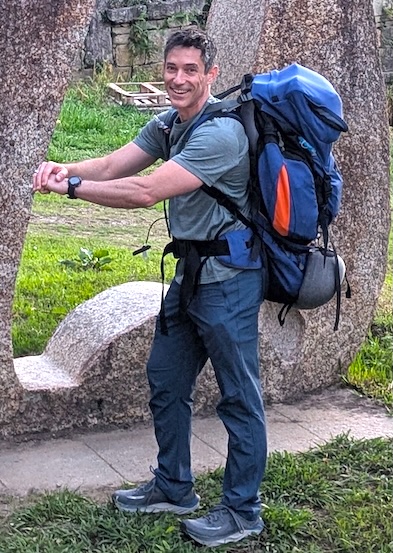
Halfway through the first day, I put plan B into action: I moved the essentials into my CamelBak (about 7 kilos, or 15 pounds) and hired the luggage transfer service. Every morning they picked up my main backpack, which had the capacity and weight of a 4-year-old, and every afternoon they delivered it to my next stop.
Everyone does the Camino their own way. When this option exists, I like the combination: more room to bring things that make the Camino more pleasant, without having to carry them. Half pilgrim, half prince, all for €22 😃
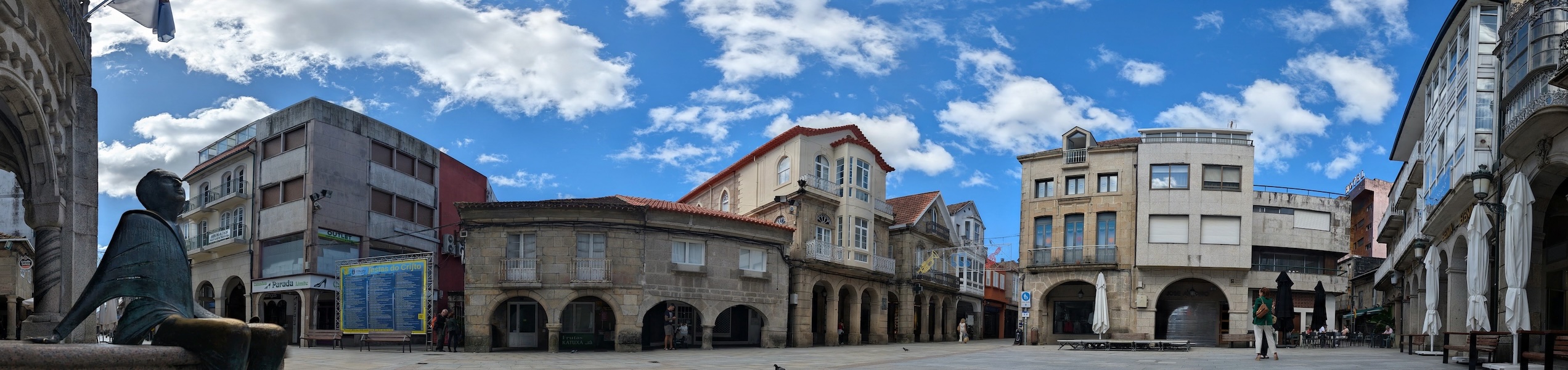
Before I forget: O Porriño is small and charming. Here’s a panorama of its main square, with a statue on the left of an influential architect who lived there:
I think about other trails I want to walk in the future that won’t have a luggage service, and I think I learned a lot about what’s truly essential. For example, merino wool, which I honestly wasn’t going to include because it doesn’t fit with everything else, but…
Practical note
The Magic of Merino Wool
If you haven’t heard of it, merino wool is magic. It’s woven by elves from fibers taken from the manes of pink unicorns.
Or at least it seems that way, because after sweating in a merino t-shirt all day, it didn’t smell. And it’s not that it wasn’t dirty. I noticed that when I washed it.
The fabric needs fairly delicate care, which makes me think that with a little bioengineering on the unicorns, we might get it to survive the dryer.
In the meantime, these clothes are VERY expensive, but you only need a couple of each item (t-shirts, socks, and underwear), and you need far fewer changes of clothes.
4. Redondela: Enthusiasm Is (Sort of) Contagious
In the distance, the next stop, Redondela: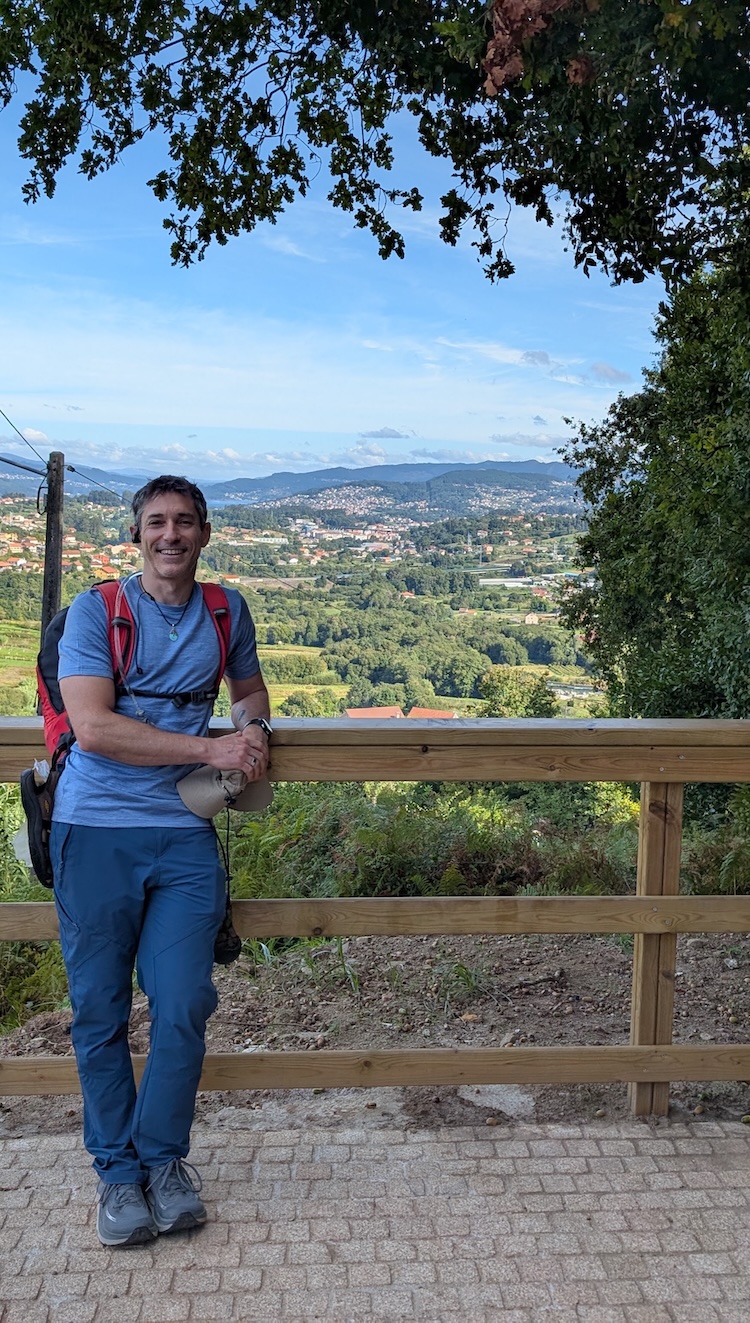
“What can I do here that tourists don’t usually do, but that’s worth it?”
I asked the 4 people in the barbershop: 3 stylists and another customer.
The general response was lukewarm… and the consensus was: you need to leave town to see anything more interesting. When it was the last person’s turn, her enthusiasm was a 7 on a scale of 1 to 5.
3 of her recommendations became important parts of my trip. I regret not taking a photo with her.
In Redondela, she recommended taking the “chu tren” (a little tourist choo-choo train) to watch the sunset from the beach. It wasn’t really a train, but it was worth it.
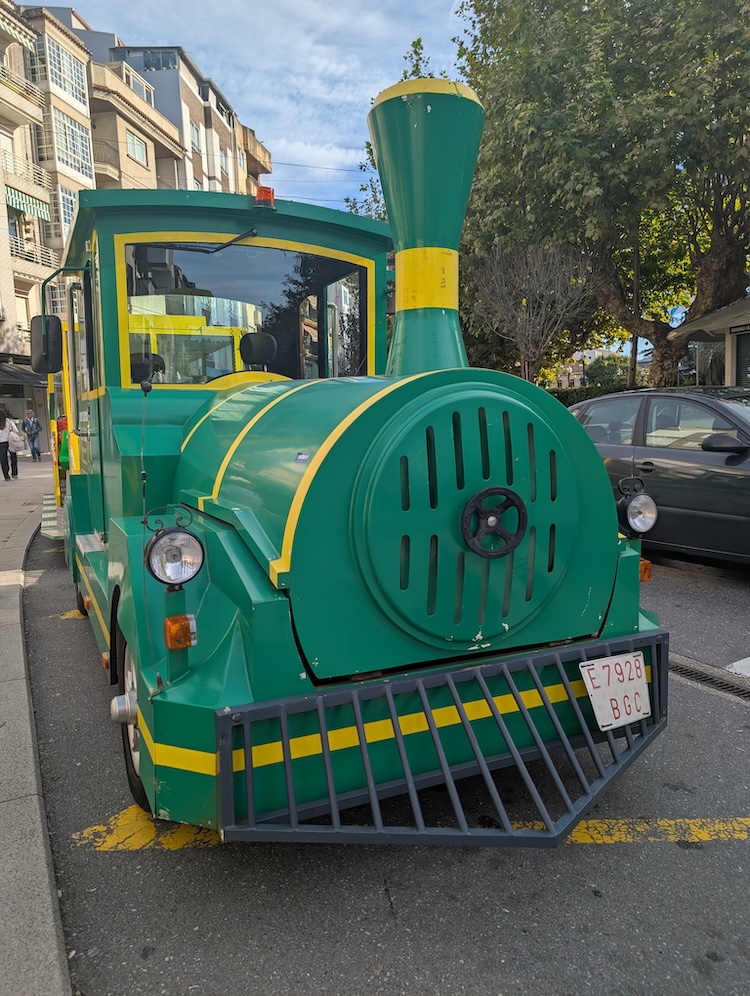
Sometimes enthusiasm isn’t contagious: we don’t always get excited about the same things the other person does. But seeing someone that enthusiastic is endearing, and that has its own value.
The other two recommendations get their own space further on.
4.5. Arcade: The Generosity of Art
I was in Arcade for only an hour, thanks to another recommendation from the enthusiastic stylist at the Redondela barbershop.
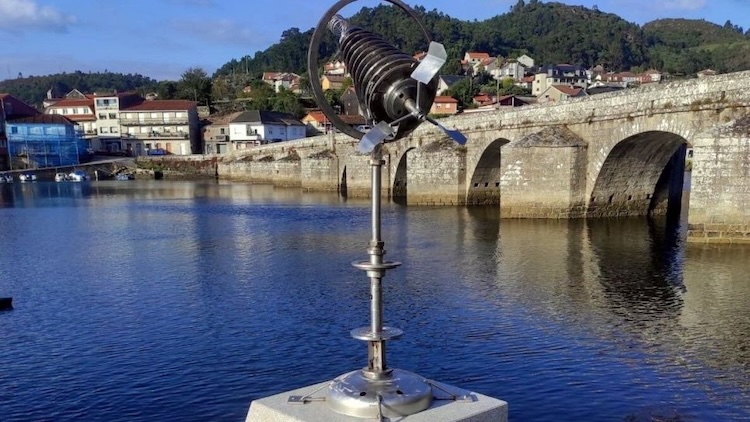
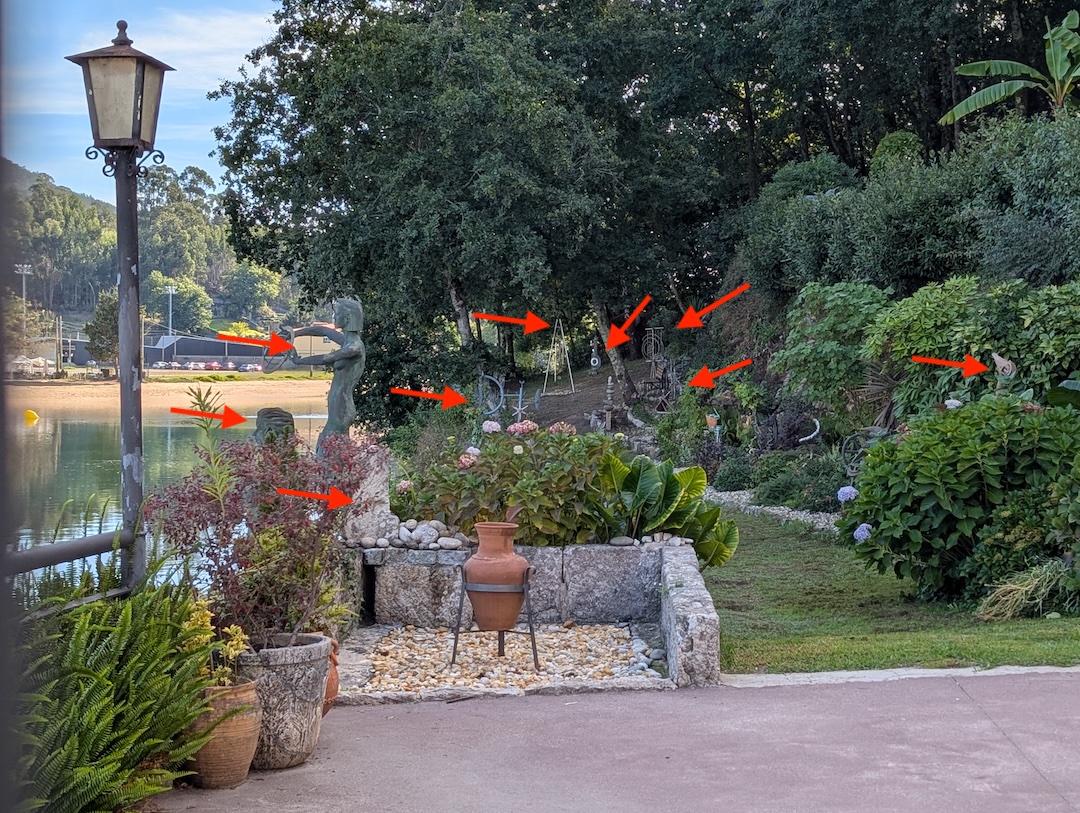
Under the bridge, she said, I’d find a sculpture of a telescope pointing toward Santiago de Compostela. And across the street, the house of the scrap-metal sculptor Bernardo Seoane. «Don’t try to go in, but from outside you’ll be able to see many of his sculptures.»
Her directions worked, and I found the telescope:
And across the street, the sculptor’s house, where you could see some of the sculptures from a distance (I added arrows to show you how many line the little path):
But I said to Rachel, a very unassuming Californian I had met that same day: “Let’s ring the doorbell. Maybe someone will want to show us the rest of the art.”
She replied: “If someone answers annoyed, I don’t know you. If they let us in, we’re good friends.”
Well. Virginia Seoane, the sculptor Bernardo’s widow, answered the door. With great generosity, she showed us all the sculptures in the rest of the garden, including permission to climb onto the elephant, made 100% of scrap metal:
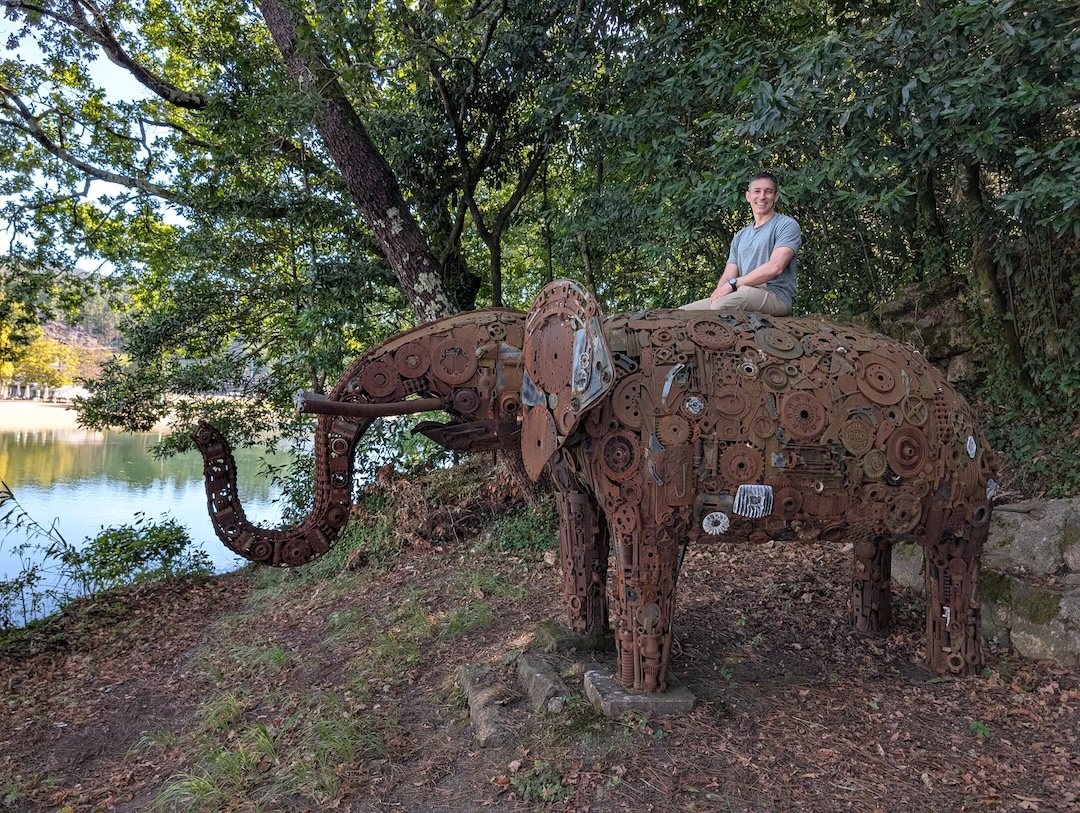
The tour included the two rooms where most of the sculptor’s work is kept… The time and care Mrs. Virginia gave us left me thinking about how much satisfaction the gesture gave her. Her eyes were full of pride in every piece.
Few pilgrims have that kind of local knowledge, and almost no one rings the doorbell. I wonder how many doors like this one we walk right past, simply because we don’t ask.
I think art usually wants to be shared. My request was, in a way, an offering.
5. Towards Pontevedra: Art Depends on Context More Than It Seems
There’s a famous video of the violinist Joshua Bell playing his Stradivarius, worth more than $3 million, incognito in a Washington, D.C. subway station. A few days earlier, he had filled Boston’s Symphony Hall, with tickets at around $100. In the subway, almost no one stopped to listen, and he collected about $32.
That art depends on context, I already knew. What I didn’t know was how much. And knowing it isn’t the same as living it.
For example, I was climbing a beautiful hill. The light made the forest look like something out of a movie: there was no mist, but you could see rays of sunlight cutting through the trees everywhere. Here’s a video, which really doesn’t do it justice:
All it needed was music. And then… in the distance, I start hearing the theme from Amélie.
If you don’t know what I mean, I took a short video. Maybe you’ll recognize it:
The pianist was no virtuoso (I’m being generous). But… hearing live music in that spot was truly special. The amount of talent this pianist needed to earn a few coins was quite modest.
Later, in Pontevedra, the biggest city on my Camino up to that point, the musicians playing in the square on Saturday night were in another league. And even so, I wonder which of these artists makes more money from their art.
Sometimes it’s not about how much talent you have, but about where you present your art 🙂
6. Caldas de Reis: The Luxury of Time
Another of the stylist’s recommendations: the cheesecake at «O Loureiro,» an unpretentious restaurant with a cheesecake to die (slowly) for:
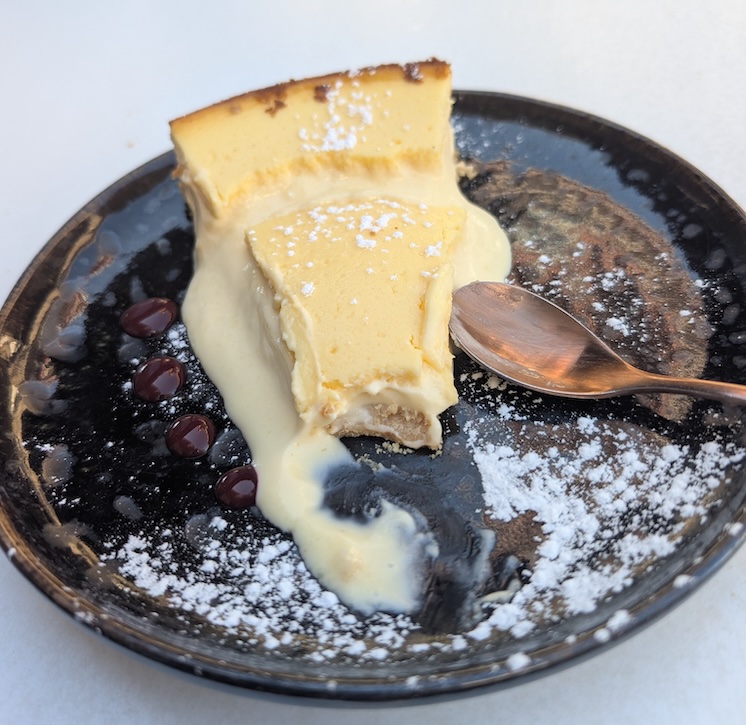
Walking 4 or 5 hours and then having time to rest, explore a pretty place, or sit for a couple of hours on a terrace with a cheesecake like that is a real luxury, I know.
But it’s a more accessible luxury than many people think. Some people do the Camino on €25 to €35 a day, which is hard to pull off almost anywhere else in the world.
The hard part, probably, is taking that much time. And that’s not just a money decision: it involves a lot of logistics. And sometimes it simply means deciding we’re going to do it, and then starting to plan and make it happen, which itself takes time and effort.
Maybe that’s why even many of us who can do it often put it off for «later,» which usually means never.
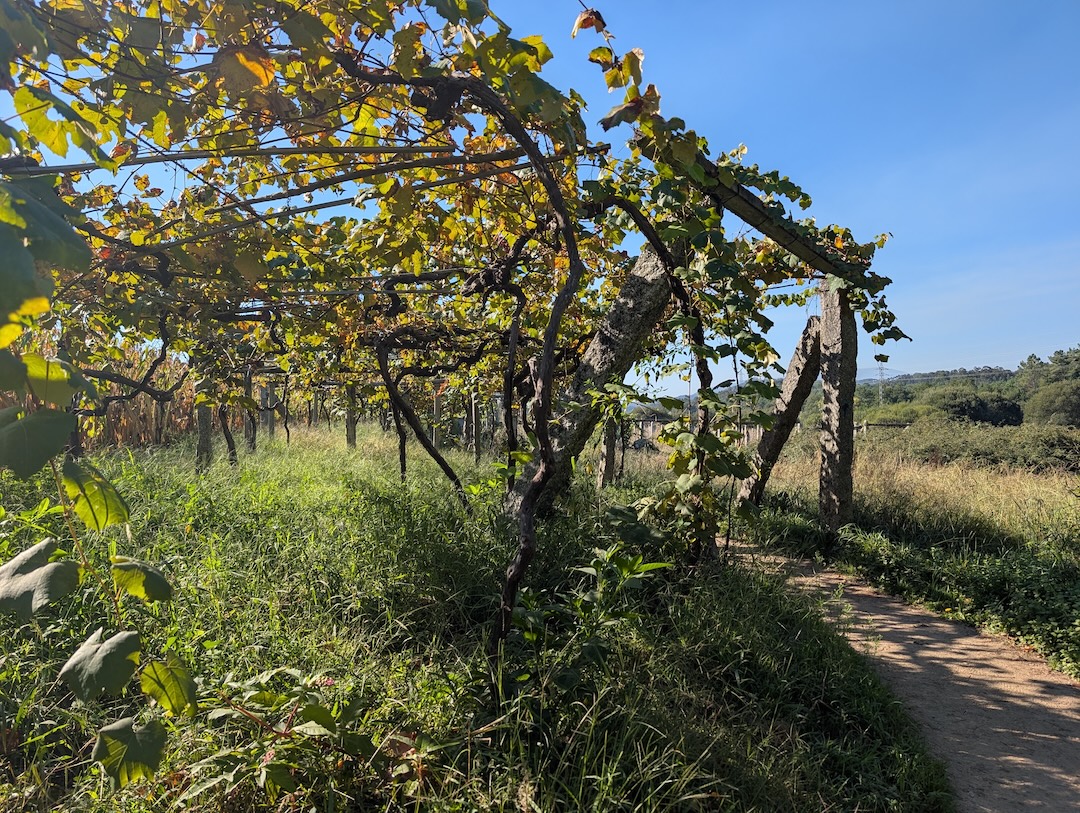
On the way out of Caldas de Reis, I took this photo, typical of the region, where there are vineyards everywhere:
7. From Pontevedra to Padrón: Alone vs. Together
Originally, I was supposed to do the Camino with my siblings and my mom. Circumstances changed for everyone but me, and I decided to go alone. Lots of people do it solo… and having that experience mattered to me. It’s something I’d do again without thinking twice.
And I think for those who feel they need company for a trip like this, it may be even more important to do it on their own. If we can’t put up with ourselves… how can we ask someone else to?
From Pontevedra to Padrón I had very few interactions, and it was fantastic.
Earlier, on the way to Pontevedra, I had met Rachel (the same one from the doorbell in Arcade), a book editor who has worked with people I truly admire. I’m almost sure I’ll see her again. What an interesting person! We talked about performative spirituality, and about surprising things she discovered while editing very well-known spiritual teachers.
The day was long for many, but between conversations, time flew. I barely took any photos. We stopped in different places, stretching the hours in a very organic way.
Then, another day, I met a Spanish police officer, and we ended up talking about how hard it is for men to open up emotionally with their friends, and how much harder it is for a cop. Fascinating people and conversations, and very different ones.
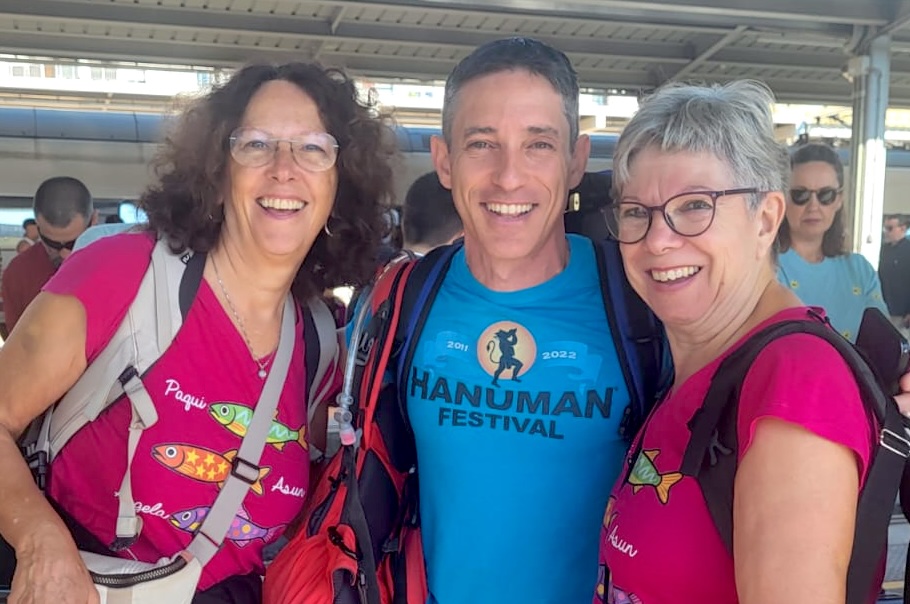
And these two women, Ángela and Paqui, I ran into EVERY day of the Camino, in places that weren’t always busy. On the day of the train out of Santiago… we ran into each other again, and finally took a photo:
8. Santiago de Compostela: Speed and Focus
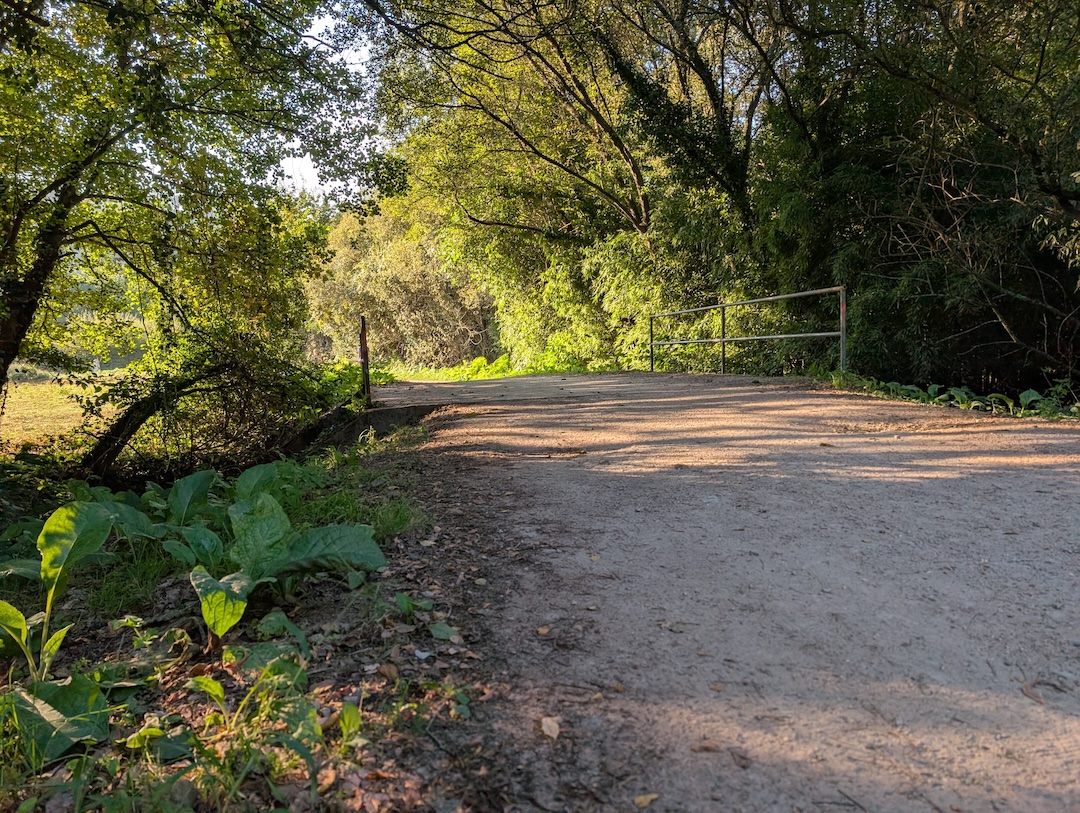
The whole trip had different rhythms. Sometimes I wanted to pick up the pace and feel like I was getting a workout. Other times, especially when everything was green, I wanted to walk slowly and enjoy my surroundings. The Portuguese route has lots of stretches like this:
Likewise, when I reached the place where I’d spend the night, I’d take my time and walk slowly around town. Yes: after walking for several hours, more walking, in the same town. Between the 4 or 5 hours on the trail and a couple more hours strolling around each town, there wasn’t a day I walked less than 6 hours.
There were also lots of places to stop. Whether it was natural beauty, a good spot for a fresh orange juice, or someone playing music, the trail is full of natural moments and places to pause.
The last stretch, from Padrón to Santiago, was full of moments of great beauty, and places with nothing special about them. Often I had both in front of me at the same time, something beautiful on one side and something drab on the other, and I noticed how much my mood shifted depending on where I put my attention.
I spent a good part of the Camino singing and dancing, mostly to the Beatles. An Englishman even corrected my lyrics on one song 🙂
Even on this last day, which felt heavier because of the terrain and the distance, I was intensely aware of how much I can choose my mood depending on what I give my energy to. I know it sounds cliché… but this experience really drove it home.
Wrapping Up
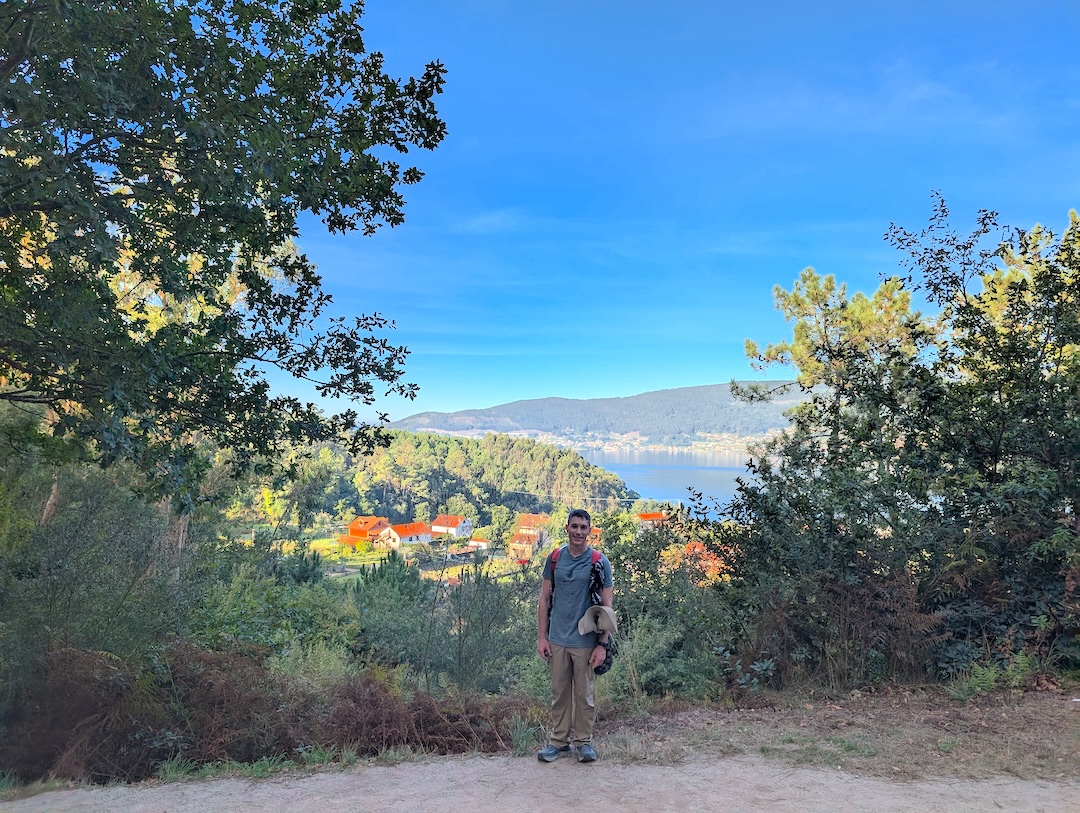
Walking was meditative. I wonder how long I’ll remember to slow down and smell the flowers… and to look back. At several points on the Camino, I found the best views by turning around to see the town I was leaving behind. Here’s an example:
That’s partly why I’m writing this. Reflecting on what you’ve lived is another way of turning around to look at the view.
I’m endlessly grateful to have had this experience, and I want to do it again.
I love Spain. Especially the little towns. I find them charming.
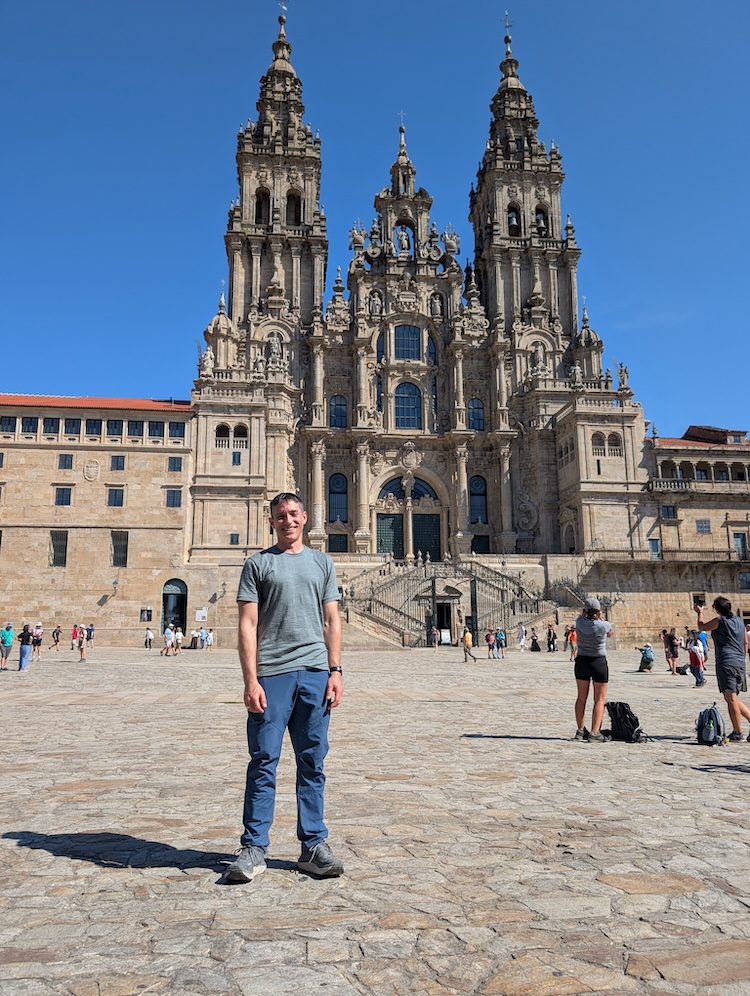
And arriving in Santiago… honestly, it wasn’t that special. The Cathedral is imposing, and I got to admire it for a good while. The diploma… is a piece of paper I may not look at many times in my life, like all the other ones I have stashed away. We’ll see if it helps at the gates of heaven.
The experience of every day that led up to it, that’s the gift I gave myself this year.
And now, on this train, I’m moving at a speed that already feels too fast. In a little while I might change my mind… Below, a photo of the Cathedral, the end of the Camino: